How to Choose Men's Accessories Gift Boxes for Global Buyers
Choosing Men Accessories Gift Boxes for global buyers is not simply a packaging decision. It is a test of market awareness, product protection, and cultural judgment. A box may look premium in London but feel excessive in Seoul or difficult to recycle in Berlin. Small details matter. Think of a watch cushion, a belt fold, or a pair of cufflinks moving through several warehouses.
Industry data supports this wider view. DHL’s E-Commerce Trends Report 2024 reports that 59% of surveyed shoppers purchase from international retailers, showing the importance of cross-border expectations. Packaging must therefore survive longer delivery routes and communicate value without personal assistance. Smithers’ global packaging research also identifies sustainability, material efficiency, and improved packaging performance as continuing industry priorities. These findings should influence box structure, inserts, labeling, and material selection.
A reliable buying process begins with the accessories themselves. Leather goods need stable sizing and protection from scratches. Metal items need soft, non-abrasive interiors. Fragrance-related accessories require careful separation and compliant shipping information. Gift presentation matters, but not at the expense of freight efficiency. Oversized boxes create unnecessary volume and may increase transport costs.
There is no universal box standard. That assumption is worth challenging. Luxury buyers may prefer rigid paperboard, while corporate purchasers may value recyclable folding cartons and easy storage. FSC-certified paper, soy-based inks, and plastic-free inserts can strengthen sustainability claims, but certifications must be verified with suppliers. A polished sample is not enough. Request compression tests, moisture checks, and transit trials before placing a large order. Mistakes remain possible. However, measured testing makes global purchasing more dependable, credible, and commercially practical.
Define the Target Market and Buyer Requirements
How to Choose Men's Accessories Gift Boxes for Global Buyers
Define the Target Market and Buyer Requirements
A suitable gift box begins with a clear buyer profile, not a decorative design. Identify the customer’s age, income level, gifting occasion, and shopping habits. A corporate buyer may need understated packaging for formal events. A young online shopper may prefer compact boxes with stronger visual appeal. Ask direct questions about preferred accessories, budget ranges, and expected order quantities.
Regional habits also influence the box structure. Buyers in humid climates may require moisture-resistant materials. Customers in colder regions might value larger boxes for scarves, gloves, or layered accessories. Measure each product before selecting inserts, because loose items can appear cheap and become damaged during shipping. Small details matter.
Price expectations must match production realities. Confirm the target retail price, minimum order quantity, delivery schedule, and acceptable material options. Recyclable paper, molded pulp, and fabric-lined interiors create different cost levels. Do not assume one design suits every market. It often does not. A first sample may look attractive but fail during transport testing. That weakness should be recorded, not hidden. Test the box with real products, repeated opening, and ordinary handling conditions. Reliable buyer research combines written requirements with observed behavior, since customers sometimes request premium features but choose simpler options at checkout.
Evaluate Materials, Design, and Packaging Quality
How to Choose Men's Accessories Gift Boxes for Global Buyers
Material choice should balance appearance, protection, and responsible sourcing. McKinsey’s 2023 global packaging survey found that 60–70% of consumers would pay more for sustainable packaging. Use sturdy paperboard with recycled content or credible forestry certification. Avoid oversized boxes that waste space during international shipping. A well-fitted insert should prevent belts, wallets, or watches from moving inside. Test the box with drop, compression, humidity, and vibration trials. Small details matter.
Design quality should feel refined without becoming difficult to open. Neutral colors, clean typography, and subtle textures usually suit different markets better than loud seasonal graphics. Magnetic closures can create a premium experience, but they add weight and complicate recycling. Smithers’ sustainable packaging market outlook identifies recyclability and material reduction as continuing industry priorities through 2028. That signal should influence purchasing decisions, not merely marketing language. Include clear material information when possible. Buyers increasingly inspect these details.
Packaging quality also includes consistency. Check corner alignment, print registration, hinge strength, and odor after production. A box may look excellent in a sample room but fail after humid storage. I have seen attractive packaging lose its value through crushed edges and loose inserts. That is easy to underestimate. The safest choice combines practical testing, restrained design, and honest material claims. Perfect packaging is unlikely; measurable improvement is more credible.
Check Customization, Compliance, and Shipping Needs
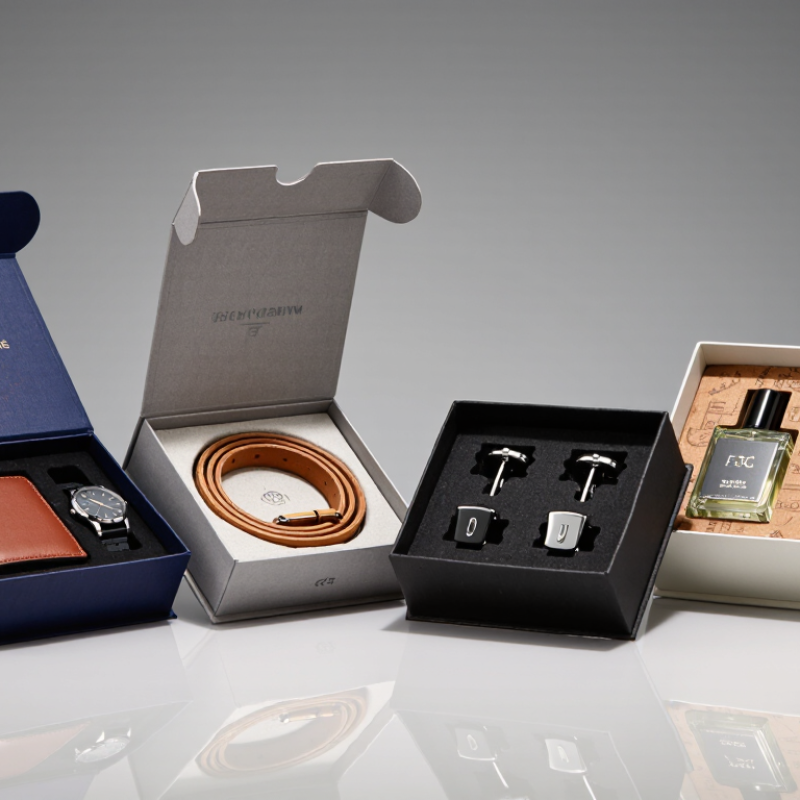
Choosing men’s accessories gift boxes for global buyers requires more than attractive colors and premium finishes. Start with the products inside. A box for belts needs different depth than one for cufflinks or wallets. Confirm inner dimensions, insert strength, and opening style with a physical sample. Custom printing, foil details, magnetic closures, and recycled materials can change costs and production times. In my experience, digital proofs often hide color differences. Always approve a finished sample.
Tips: Request material specifications, product dimensions, logo files, packaging photographs, and a written quotation. Ask about minimum order quantities and replacement policies. Small details matter.
Compliance should guide customization decisions. Check labeling rules for material content, country of origin, care instructions, and packaging waste. Requirements differ between markets and may change. Do not assume one box design fits every destination. Ask qualified import specialists or local authorities when rules are unclear. A supplier’s past experience helps, but it is not legal proof. Keep test reports and product documents organized.
Shipping needs equal attention. Measure the packed carton, not only the gift box. Confirm carton strength, moisture protection, pallet limits, and delivery terms. Calculate duties using the correct product classification with a customs professional. A beautiful box can arrive crushed. It happens. Before placing a large order, test one shipment to each major region. Review damage rates, customs delays, and customer feedback. Some decisions may need revision after real transport data appears.
Compare Suppliers, Costs, and Order Terms
For global buyers, a men’s accessories gift box is more than a container. It protects watches, belts, wallets, or grooming tools during long-distance transport. Compare suppliers through physical samples, not photos alone. Check the board thickness, hinge strength, lining softness, printing accuracy, and odor. A reliable supplier should explain material sources, quality checks, and production capacity clearly. Ask for recent inspection records when available.
Cost comparisons need more than the unit price. Request separate figures for sampling, molds, printing plates, inserts, packaging, and delivery. A box priced at $2 may become $3.40 after custom finishes and export packing. Compare quotations using the same quantity and specifications. Confirm whether prices include shipping, insurance, duties, or local handling charges. Small details matter.
Order terms can affect cash flow and delivery risk. Review the minimum order quantity, sample timeline, production lead time, payment stages, and acceptable defect rate. Define who pays for replacements if cartons arrive crushed or colors differ significantly. Keep written approval for artwork and measurements. I once underestimated inner-tray adjustments, which delayed production by several days. That mistake was avoidable. Flexible suppliers may accept a pilot order, but lower quantities often increase the unit cost. Check whether reordering uses the same materials and dimensions, especially when seasonal demand changes quickly.
How to Choose Men's Accessories Gift Boxes for Global Buyers
Benchmark comparison of typical supplier profiles for a 500-unit order of men's accessory gift boxes.
| Supplier Profile |
Typical MOQ |
Production Lead Time |
Common Payment Terms |
| Factory-direct manufacturer |
500 units |
25–35 days |
30% deposit, 70% before shipment |
| Export trading supplier |
300 units |
20–30 days |
30% deposit, balance before shipment |
| Small-batch customization specialist |
100 units |
15–25 days |
50% deposit, 50% before shipment |
Factory-direct sourcing usually offers the lowest unit cost at higher order volumes, while small-batch specialists provide lower MOQs and faster customization. Buyers should confirm packaging specifications, shipping terms, sample fees, inspection standards, and duties before placing an order.