Leave Your Message

Title*

First Name*

Last Name*

Phone*

country*

Message*

Customized Request

China Top Mens Dress Tie Manufacturer and Supplier

China has become a significant sourcing center for refined menswear accessories, including the Mens Dress Tie. Experienced manufacturers combine traditional tailoring methods with efficient textile production. Their workshops may handle silk weaving, fabric cutting, lining, stitching, pressing, inspection, and packaging under one coordinated system.

A reliable supplier understands that appearance begins with material selection. Silk should feel smooth, hold its color, and recover after gentle handling. Polyester and blended fabrics can provide practical durability for uniforms, retail collections, and frequent business wear. Details matter. A balanced blade, clean edges, firm loops, and even stitching create a tie that sits properly.

Not every attractive sample represents stable production. That deserves attention.

Professional factories usually confirm fabric weight, dimensions, colors, packaging, and logo placement before bulk manufacturing. Samples should be reviewed under natural and indoor lighting. Color differences can appear after production, especially across separate dye lots. Careful suppliers record these specifications and maintain inspection checkpoints throughout the order.

A trustworthy China Mens Dress Tie manufacturer also communicates clearly about minimum quantities, lead times, customization, and shipping documentation. Clear communication reduces costly misunderstandings. It does not remove every risk.

Buyers should assess factory experience, production capacity, quality records, and customer feedback before choosing a partner. Certifications can support confidence, but practical sample testing remains essential. This article explores how manufacturers and suppliers build dependable dress ties, manage customization, and support international buyers with consistent service. Small weaknesses may still appear, so honest evaluation is more valuable than exaggerated promises.
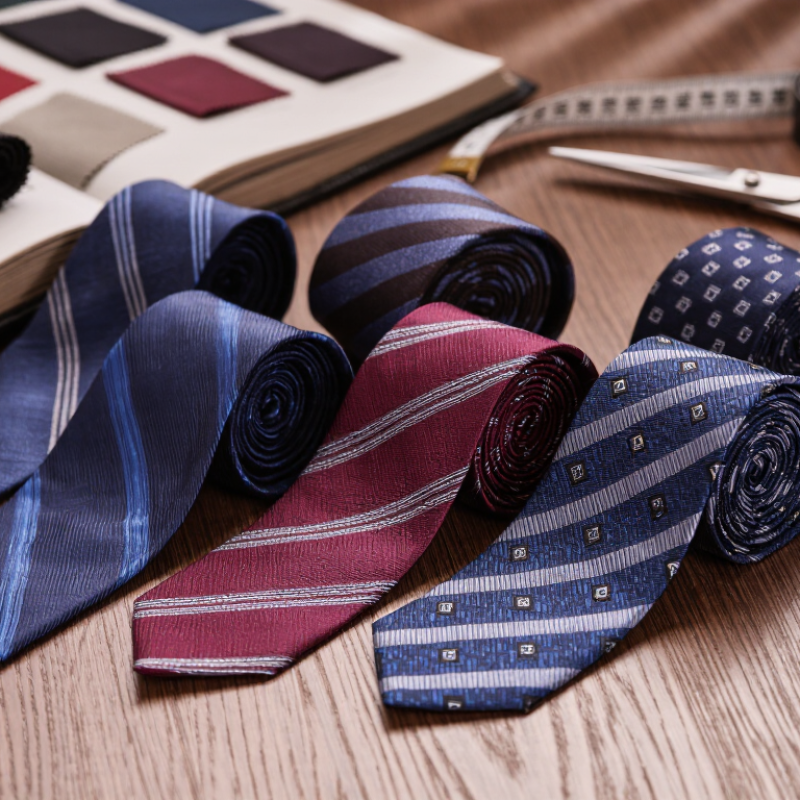
China Top Mens Dress Tie Manufacturer and Supplier

China’s Role as a Top Men’s Dress Tie Manufacturer and Supplier

China’s Role as a Top Men’s Dress Tie Manufacturer and Supplier

China has become a major production base for men’s dress ties, supported by mature textile clusters and export logistics. The WTO World Trade Statistical Review identifies China as the world’s largest textile and clothing exporter. This wider advantage also supports tie manufacturing, from woven fabric to precise cutting and packaging. UN Comtrade data for HS 6215 consistently places China among the leading exporters of ties and bow ties. That position reflects scale, but not automatic quality.

Experienced suppliers usually control fabric inspection, color matching, interlining, stitching, and final pressing in one workflow. A well-made silk tie should keep a clean knot, balanced blade, and smooth recovery after use.

Polyester remains commercially important. Textile Exchange reported that polyester represented about 57% of global fiber production in 2023. This helps Chinese factories offer affordable, stable alternatives, although material choice still affects hand feel and durability. A low quote can hide weak testing.

Tips: Request fabric composition, shrinkage results, colorfastness records, and pre-production samples. Check whether the factory measures tie length, width, and pattern alignment consistently. Ask for production photos and an inspection plan. Small details matter.

China’s supplier network is efficient, yet improvement is still necessary. Some workshops rely too heavily on standard designs and rush sampling. Buyers should compare workmanship, communication, and traceability, not price alone. A reliable manufacturer welcomes corrections before mass production and documents each change clearly. Availability is useful, but careful verification remains essential.
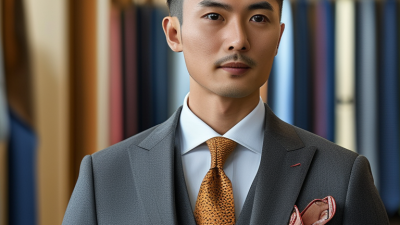

Types and Materials of Men’s Dress Ties Made in China

Men’s dress ties made in China offer many choices in type, texture, and material. Silk remains popular for weddings, offices, and formal dinners. It feels smooth and holds a refined drape. Polyester provides stronger wrinkle resistance and easier daily care. Wool adds warmth, texture, and a softer visual depth. Linen and cotton create a lighter, relaxed appearance for warmer seasons. Blended fabrics can balance cost, durability, and comfort. Each material affects the tie’s weight, knot shape, and performance.

Common constructions include woven, jacquard, printed, knitted, and seven-fold ties. Woven ties usually show sharper patterns and stable structure. Jacquard designs are built directly into the fabric. Printed ties allow detailed artwork and flexible color changes. Knitted ties have a casual surface and often use a square end. Seven-fold construction uses more fabric and creates a fuller knot. Width also matters. A six-centimeter tie looks modern, while an eight-centimeter style appears more traditional.

Experienced Chinese manufacturers normally inspect fabric, stitching, lining, color, and finished measurements. They may test colorfastness and examine the tie under strong light. For bulk orders, approved samples should guide production. Small errors remain possible. A reliable supplier explains material grades, production limits, and inspection methods clearly. Buyers should check whether the tie recovers after folding and whether the blade hangs evenly. A slightly uneven edge may seem minor, but it can reveal rushed cutting or weak quality control.

China Top Mens Dress Tie Manufacturer and Supplier - Types and Materials of Men’s Dress Ties Made in China
Product Dimension Common Type or Specification Typical Material Standard Details Suitable Use Manufacturing and Quality Considerations
Classic Necktie Traditional pointed-end tie Silk, polyester, wool, or blended fabric Usually 145–155 cm long and 7–9 cm wide at the front blade Business suits, formal meetings, ceremonies, and office wear Check fabric density, symmetrical blade shape, clean edges, secure stitching, and consistent color across production lots.
Slim Tie Narrow pointed-end tie Silk, polyester, cotton, or viscose blends Commonly 5–7 cm wide; length is generally similar to a standard necktie Modern business clothing, fashion suits, and semi-formal outfits The interlining should support the narrow shape without making the tie excessively stiff or prone to twisting.
Extra-Wide Tie Broad traditional tie Silk, wool, polyester, or silk blends Typically more than 9 cm wide at the front blade Classic tailoring, vintage-inspired clothing, and larger knot styles Pattern placement, blade balance, and adequate fabric recovery are important for a neat appearance after tying.
Knit Tie Knitted square-end or pointed-end tie Silk, wool, cotton, or synthetic yarn Often 5–7 cm wide; square-end versions are common Smart-casual clothing, cardigans, blazers, and textured tailoring Inspect knitting uniformity, edge stability, yarn strength, and resistance to stretching during handling.
Bow Tie Self-tie or pre-tied bow tie Silk, polyester, cotton, velvet, or wool Most adult styles are adjustable; the finished bow is commonly about 10–13 cm wide Black-tie events, weddings, formal dinners, and ceremonial uniforms Adjustable hardware should operate smoothly, while the bow should retain its shape without puckering.
Solid-Color Tie Plain, single-color design Silk, polyester, microfiber, wool, or recycled polyester Available in standard, slim, and wide widths Corporate uniforms, formal wardrobes, promotional programs, and coordinated apparel Color matching should be checked against an approved standard; fabric should have even dyeing and minimal shade variation.
Striped Tie Diagonal or vertical stripe pattern Woven silk, polyester, cotton, or blended fabric Stripe direction and spacing depend on the design; standard tie lengths remain common Business attire, school or institutional wear, and classic menswear Cutting must keep the stripe angle consistent, and the pattern should align properly along the blade and neck area.
Printed Tie Screen-printed, digital-printed, or transfer-printed design Silk, polyester, microfiber, or cotton Supports repeating patterns, artwork, logos supplied by the buyer, and custom color layouts Seasonal collections, events, uniforms, gifts, and custom orders Evaluate print sharpness, colorfastness, registration accuracy, surface feel, and wash or dry-cleaning performance.
Woven Jacquard Tie Pattern integrated into the fabric structure Silk, polyester, cotton, or blended yarn Creates durable geometric, floral, textured, or repeating patterns Business wear, formal accessories, uniform programs, and premium collections Woven patterns normally offer good durability; inspect yarn floats, pattern clarity, snag resistance, and fabric weight.
Microfiber Tie Fine synthetic-fiber necktie Polyester microfiber Commonly made in standard or slim widths with a smooth, silk-like surface Daily office wear, uniforms, promotional orders, and cost-sensitive programs Benefits include consistent production and easy care; verify surface softness, colorfastness, wrinkle resistance, and finishing quality.
Silk Tie Woven or printed natural-fiber tie Silk, including common woven silk fabrics such as twill Soft hand feel, natural luster, and good drape; commonly produced in standard lengths and widths Formalwear, luxury tailoring, weddings, and premium retail collections Check for even weave, clean selvedges, color consistency, low snagging risk, and appropriate care labeling.
Polyester Tie Durable synthetic-fiber tie Woven or knitted polyester Available in solid, printed, striped, and jacquard constructions Uniforms, everyday business wear, school programs, and large-volume orders Polyester generally offers good color retention and abrasion resistance; inspect shine level, drape, seam quality, and finishing.
Wool Tie Textured seasonal tie Wool or wool blend Usually has a matte surface and fuller texture than silk or polyester Autumn and winter tailoring, tweed jackets, blazers, and smart-casual outfits Assess pilling resistance, fabric recovery, edge definition, moth-protection guidance, and suitability for specialist cleaning.
Cotton Tie Casual or lightweight fabric tie Cotton or cotton blend Generally has a matte appearance and breathable hand feel Spring and summer clothing, casual suits, blazers, and resort wear Check shrinkage control, colorfastness, crease behavior, fabric weight, and the stability of the interlining.
Tie Construction Three-fold or lined construction Outer shell with woven, polyester, or wool interlining Three-fold ties use additional shell fabric; lined ties use a separate inner layer to support shape Different quality levels and price points across formal and commercial collections Review fold symmetry, lining attachment, bar-tack security, slip-stitch quality, and the tie’s ability to return to shape.
Care and Packing Storage, labeling, and export presentation Depends on the outer fabric and accessories Most ties should be untied after use, stored flat or loosely rolled, and protected from crushing Retail packaging, uniform distribution, wholesale shipment, and international delivery Care labels should match the actual fiber content; packaging should prevent moisture, dust, creasing, and abrasion during transport.

How Chinese Tie Manufacturers Control Production and Quality

Chinese men’s dress tie manufacturers control production through defined checkpoints, not visual inspection alone. Fabric rolls are checked for weight, color, width, and weaving defects before cutting. Patterns are tested to protect symmetry and knot shape. Sewing teams then follow approved samples, stitch counts, and pressing temperatures. Experienced factories record each batch, operator, and machine setting. This creates traceability when a tie fails inspection.

Quality control also responds to material risk. Textile Exchange’s 2024 Materials Market Report estimated global fiber production at 124 million tonnes in 2023. That scale makes responsible sourcing and accurate material records increasingly important. Chinese suppliers often verify fiber content, colorfastness, shrinkage, and seam strength through internal checks or independent laboratories. Many factories also use AQL sampling, commonly applying AQL 2.5 for general visual defects. However, sampling is not perfect. A small defect can still escape detection, especially during rushed final packing.

Tips: Ask for a pre-production sample, material composition report, and inspection checklist. Confirm tolerance levels for length, width, color, and label placement. Request photos from cutting, sewing, pressing, and packing. ISO’s 2022 Survey showed China had the world’s largest base of ISO 9001 certificates, but certification alone cannot replace daily factory discipline. A supplier should explain corrective actions clearly, not simply promise better quality.

Customization Services for Branded Men’s Dress Ties

Custom men’s dress ties require more than attractive fabric and neat stitching. As a China-based manufacturer and supplier, we support branded tie projects from design development to final packing. Our team reviews artwork, measurements, fabric texture, and color references before creating a sample.

Clients can customize tie width, blade shape, lining, tipping, woven labels, and packaging. Silk, polyester, and blended fabrics offer different levels of shine, structure, and cost. A darker navy tie may look different under showroom lighting. We check colors against approved standards and record production details for repeat orders. Small details matter.

Sampling comes before bulk production. Our technicians examine edge alignment, stitch density, label placement, and wrinkle control. Operators inspect finished ties piece by piece, while quality staff review random samples from each production batch. Not every first sample is perfect. Sometimes the knot area feels too thick, or the lining changes the drape. We revise those points instead of hiding them. That pause protects the final result.

Reliable customization also depends on communication. A clear measurement sheet reduces confusion between design and production teams. We confirm tolerances, order quantities, packing methods, and delivery requirements in writing. For corporate uniforms, formal events, and retail collections, clients receive practical guidance without losing creative control. Careful service builds trust, though every project still deserves fresh checking.

How to Choose a Reliable Chinese Tie Supplier

China Top Men’s Dress Tie Manufacturer and Supplier

How to Choose a Reliable Chinese Tie Supplier

A reliable Chinese tie supplier should show more than polished product photos. Ask for factory details, production capacity, material sources, and recent quality records. A serious manufacturer can explain fabric weight, weave, lining, interlining, stitching, and color control clearly. Request samples before discussing large orders. Compare the sample with the approved specification, not only with the screen image. Small details matter.

Look closely at the tie’s blade shape, knot recovery, seam alignment, and edge finishing. Pull the fabric gently. It should recover without permanent distortion. Check whether the lining creates a smooth drape around the neck. A dependable supplier should also provide a measurable size chart and packaging proposal. Better communication matters. Can the team answer technical questions without changing the subject?

During supplier reviews, confirm sample approval, inspection points, delivery schedules, and payment terms in writing. Ask how defects are recorded and corrected. A factory visit or independent inspection can reveal more than a sales presentation. Still, no supplier is perfect. I have seen attractive samples hide uneven stitching in bulk production. That risk makes pre-shipment inspection worthwhile. Do not choose only by the lowest quote. Very low pricing may reflect thinner fabric, rushed labor, or weak quality control. A reliable Chinese tie manufacturer balances craftsmanship, stable capacity, transparent communication, and repeatable results. Test that balance with a small order first.