Best Mens Tie Clip Manufacturers in China for Global Buyers
Global buyers need more than a polished product photo when choosing a Mens Tie Clip manufacturer in China. They need clear specifications, dependable communication, consistent finishing, and samples that match bulk orders. A clip may look simple, yet small details matter: spring tension, smooth edges, plating tone, and the fit against a standard tie. One weak point can turn a neat accessory into a return or complaint.
Menswear accessories consultant Daniel Mercer puts it this way: “A tie clip should hold securely, sit neatly, and never distract from the outfit.” For buyers, that means checking function as carefully as appearance. Ask manufacturers about base materials, available finishes, logo methods, minimum order quantities, sample timelines, and inspection procedures. Request close-up photos, but do not treat photos as proof. A physical sample tells you more.
This guide introduces manufacturers suited to different sourcing needs, from custom branding to straightforward repeat orders. It also considers communication, production consistency, and export experience. Small differences show up fast. A clasp that feels loose. A finish that shifts under daylight. Even packaging can affect the first impression. Not every supplier will fit every buyer, and no shortlist replaces due diligence. Compare samples, confirm written specifications, and leave room for one more question before placing an order. Sourcing can still surprise you. That is worth admitting.
Understanding Men’s Tie Clips and Their Main Product Types
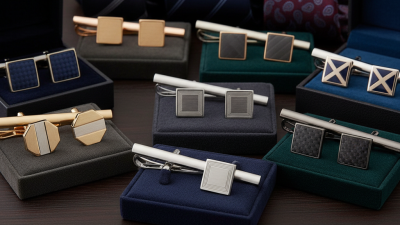
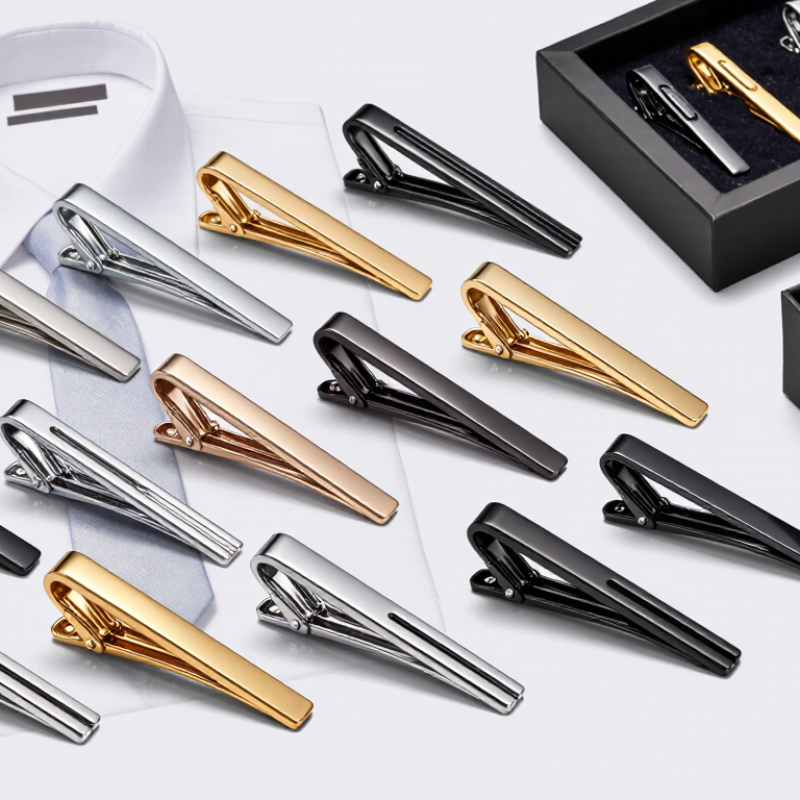
A men’s tie clip is a small fastening accessory: it holds the tie to the shirt placket and keeps fabric from swinging. The classic bar clip slides over both layers; a hinged clasp grips them more firmly. Chain styles attach to a shirt button, adding visible detail, while tie pins pass through the tie and may leave a small hole. Each type feels different in daily wear.
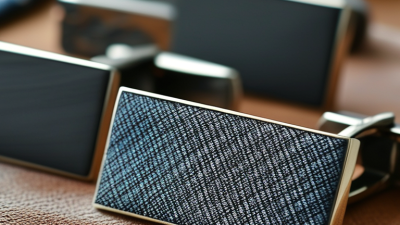
Common finishes include polished or brushed stainless steel, plated base metal, and sterling silver. For material context, the U.S. Geological Survey’s Mineral Commodity Summaries 2025 estimates worldwide silver mine production at about 25,000 metric tons in 2024. This is not tie-clip demand data, but it illustrates the wider supply behind one material option. Small components matter. Check clasp tension, smooth edges, and plating consistency; a beautiful finish can wear quickly if quality control is uneven.
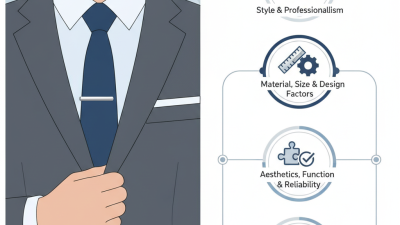
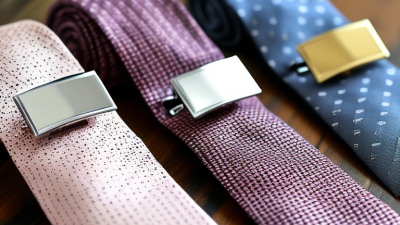
Tips: Choose a clip roughly two-thirds to three-quarters the width of the tie, then fasten it between the third and fourth shirt buttons. Test it on woven fabric before bulk ordering. A clip that grips too tightly can crease silk; one that feels loose may slide during a long workday. These checks are simple, but easy to skip.
How Tie Clips Are Designed and Manufactured in China
Designing a tie clip for global buyers starts with its intended use, not just its appearance. Designers confirm clip length, spring tension, metal thickness, and compatibility with different tie fabrics. A polished stainless-steel surface feels different from a brushed finish, while rough edges may catch on woven material. Small details matter. Sketches or CAD drawings help teams review proportions before making production tooling. Buyers should request measurements and physical samples, since photographs cannot show how firmly a clip holds a tie.
Manufacturing commonly involves cutting or stamping metal, forming the clip, polishing its edges, applying a finish, and assembling the spring mechanism. Workers inspect alignment and surface quality, then test samples for grip and repeated opening. Requirements vary by design and production facility, so confirm inspection methods rather than assuming every factory follows the same process. A first sample may look right but feel too tight. That is worth correcting before a larger order.
Tips: Share a fabric swatch and target dimensions when requesting samples. Ask how finish consistency and spring tension are checked across a batch. Keep written specifications; small changes can be missed.
Key Criteria for Evaluating Chinese Tie Clip Manufacturers
Choosing a Chinese tie clip manufacturer requires more than comparing unit prices. Ask for metal specifications, plating thickness, clasp tension, and finish samples. A polished clip should have smooth edges, a firm spring, and no visible plating gaps. Request a pre-production sample, then compare it with the approved drawing. Small differences matter.
Check quality systems and traceability. Ask how the factory records incoming metal, plating batches, and final inspections. Request recent audit evidence and test reports, but verify their dates and scope. A certificate alone proves little about a specific order. No checklist catches everything. I would also check how the supplier handles defects, replacement parts, and rushed changes in writing.
Delivery planning deserves equal attention. The World Bank’s Logistics Performance Index 2023 ranked China 19th among 139 economies, a useful country-level benchmark, not a factory rating. UNCTAD’s Review of Maritime Transport 2024 reported global maritime trade grew 2.4% in 2023, amid route disruptions. Ask manufacturers for realistic lead times, carton dimensions, packing photos, and shipment milestones. These details expose weak planning early. I would still allow buffer time; forecasts can miss.
Notable Chinese Tie Clip Manufacturers for Global Buyers
Notable Chinese tie clip manufacturers often specialize in metal accessories, offering stainless steel, brass, or zinc-alloy designs with polished, brushed, or plated finishes. For global buyers, the useful distinction is not a glossy catalogue; it is whether a factory controls stamping, polishing, plating, and spring assembly consistently. Ask for material specifications, production photos, and a sample with a firm, even grip. A polished sample can still hide a weak spring.
UNCTAD’s estimates for global e-commerce put sales at US$26.7 trillion in 2019, around 30% of global GDP. This broad figure is not tie-clip market data, but it shows why export-ready documentation and clear product information matter to international sourcing. Request packaging dimensions, carton weight, lead time, and inspection criteria before approving an order. Small items still need careful packing; loose clips can scratch one another in transit.
Tips: Compare samples under bright light and check the clip on fabric of different thicknesses. Ask how plating consistency and spring tension are checked across a production batch. Confirm that the quoted price states the material, finish, logo method, and packaging. I would not rely on a single sample alone; batch variation is easy to overlook.
How to Assess Quality, Customization, and Export Readiness
Best Mens Tie Clip Manufacturers in China for Global Buyers
A tie clip is small, but its weak points are easy to miss. Check the hinge tension, edge smoothness, alignment, and finish under neutral light. Ask for a material declaration and a measurable plating specification, not simply “premium quality.” Request samples from the intended production process, then compare them with the approved sample. A polished prototype proves little. Test several pieces. Customization should cover clip length, engraving depth, surface finish, packaging, and color consistency. Put tolerances in writing. Even then, finishes can drift between batches; allow time to review a second sample.
Export readiness deserves the same scrutiny as product quality. The World Bank’s 2023 Logistics Performance Index compares 139 economies across six areas, including customs, tracking, and timeliness. Buyers can use those areas to ask practical questions: Can the factory provide stable lead times, traceable carton counts, and complete shipping documents? Check carton strength and pack-out details before approving an order. The WTO’s 2025 Global Trade Outlook reported that merchandise trade volume grew 2.9% in 2024, making demand planning and delivery commitments worth discussing early. Small orders may expose weak processes. That is useful to learn, but not always cheap.
Best Men’s Tie Clip Manufacturers in China: A Buyer Assessment Framework
Use these five areas to compare suppliers for quality, customization, and export readiness. The 0–5 values are illustrative evaluation scores, not audited data about specific manufacturers.
Suggested approach: request material specifications and inspection records, confirm customization capabilities with samples, and verify packaging, shipping, and export documentation before placing an order.